
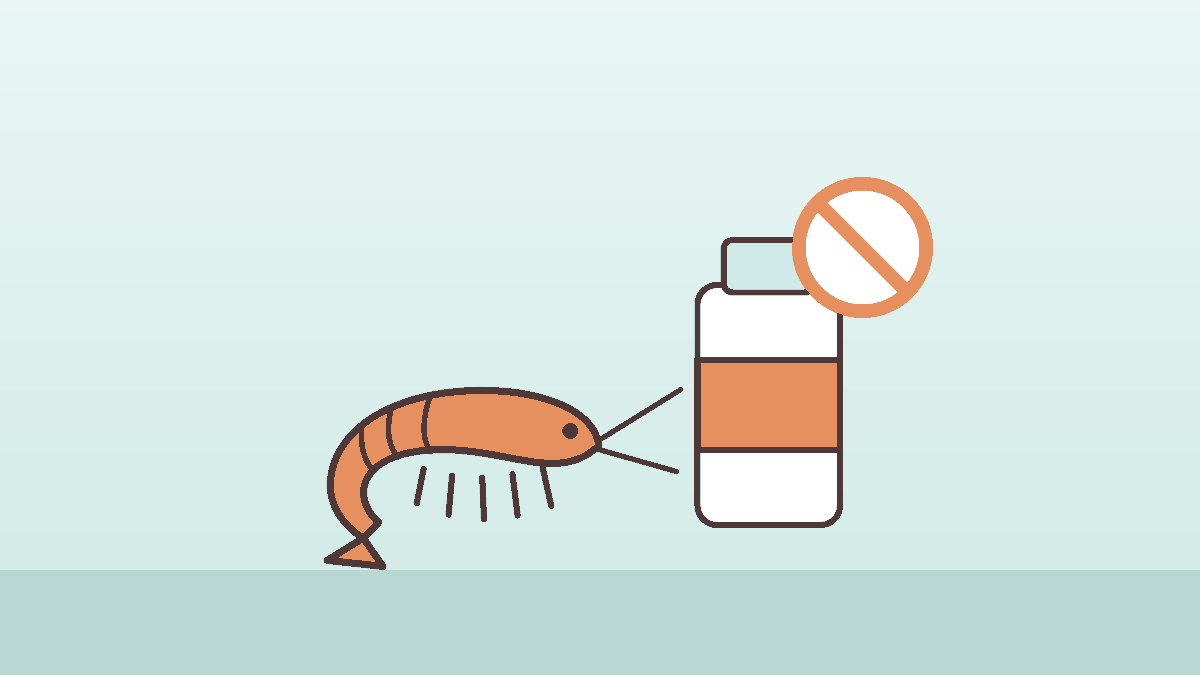
Our verdict: before you add anything to a tank with shrimp, from a fish medication to a new plant, check that it is safe for invertebrates. Copper is the best-known danger, but plant pesticides, sprays and smoke are also on the list. When in doubt, treat sick fish in a separate tank.
Why copper is a problem
A University of Florida extension paper on copper in aquaculture says copper doses that cure fish parasites are lethal for most invertebrates, and that most invertebrates will not survive a copper treatment. Its advice is to remove invertebrates before treating, and not to return them until copper is at or near zero. The paper covers marine systems, but the point about invertebrates applies to freshwater shrimp too. The same paper adds that copper is toxic to the helpful bacteria in the filter, and that copper bound to substrate can be released again if the pH drops.
Fishkeeper says the same in its care sheets for Amano and crystal red shrimp, and Practical Fishkeeping tells bamboo shrimp keepers to avoid medications containing copper or formalin.
Where copper and other poisons come from
- Fish medications and algae treatments. Garnelio, a German shrimp shop, names these as main sources and says copper-based medications are lethal for invertebrates.
- Tap water. The same source says copper can dissolve from new water pipes and instant water heaters, and suggests letting the tap run for a few minutes before use. If you suspect it, test the water you use for changes.
- Plant fertilisers. Garnelio says aquarium fertilisers do contain copper but in doses too low to harm animals. Follow the label and do not overdose.
- Pesticides on plants. Practical Fishkeeping warns that some imported plants are treated with insecticides (buprofezin, imidacloprid and trichlorfon are named) that are lethal to shrimp, and that residues can take weeks or longer to soak out. It recommends plants from reliable sellers with a pesticide-free guarantee, plants from other people’s shrimp tanks, or tissue-culture plants.
- Household sprays and smoke. The same article lists flea spray, nicotine from cigarette smoke, and even scented candles or air fresheners as possible causes of trouble.
Warning signs
Garnelio says poisoned shrimp often start jumping around the tank as if out of control, and fish may gasp at the surface or turn listless. These signs match many other problems, so test ammonia and nitrite first and then consider poisons. A water change with safe water is a sensible first step, according to the same source, provided you have checked that the new water is not the cause.
If a fish gets sick
- Practical Fishkeeping says medicating fish in a tank with shrimp is “fraught with danger” because many medications are not invertebrate-safe, and recommends keeping a spare hospital tank.
- Fishkeeper advises checking with the manufacturer that a treatment is safe with shrimp before using it.
- If you must treat the main tank, Practical Fishkeeping says to pick a product without copper or formalin. We would still move the shrimp out first.
- After any copper treatment, Garnelio says to treat the water thoroughly again, for example with activated carbon. The University of Florida paper also names activated carbon and water changes, and says to keep checking copper for weeks afterwards.
Dead animals can also poison a tank. Practical Fishkeeping notes that a dead fish or large snail hidden in the tank can cause an ammonia spike that wipes out a colony. Find any body quickly. For long-term safety see our shrimp-only aquarium guide and which fish can live with shrimp.
Sources
- University of Florida IFAS: Use of Copper in Marine Aquaculture and Aquarium Systems (Roy P. E. Yanong, 2024)
- Practical Fishkeeping: An introduction to Shrimp (Gabor Horvath)
- Practical Fishkeeping: What can I keep with shrimp? (Nathan Hill)
- Practical Fishkeeping: Fans of Flow, keeping bamboo shrimp (Neale Monks)
- Garnelio: Copper poisoning in the ornamental fish aquarium
- Fishkeeper: Amano Shrimp
The University of Florida paper is about marine systems and gives no figures for freshwater shrimp. Garnelio is a shop blog. We give no medication doses, and the advice to move shrimp out before any treatment is our own caution. If a product’s label does not say it is invertebrate-safe, assume it is not. See how we use sources.