
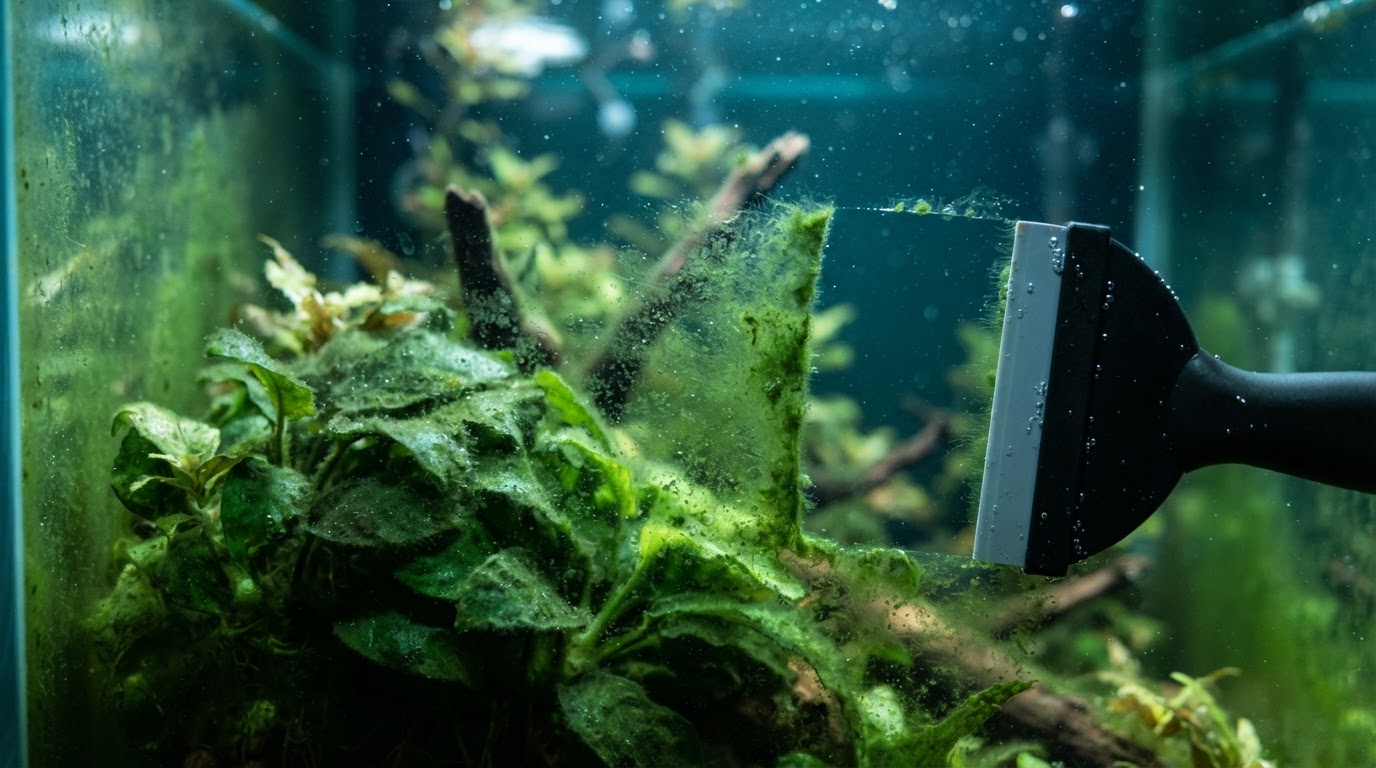
Every aquarium has algae. It is a natural part of any water body that receives light and nutrients, and a little on the glass or decorations is perfectly normal. The goal is not an algae-free tank, which does not exist, but a balanced one where algae stays at a level you barely notice. When it takes over, it is a message: something in the tank is out of balance.
The short version: algae thrives on excess light and excess nutrients, especially when plants are not using them. Control the light, control the waste, grow healthy plants and keep up with regular maintenance, and most algae problems fade.
What causes algae?
Algae needs light and nutrients such as nitrate and phosphate, and it competes with your plants for them. Trouble starts when the supply outstrips what the plants can use. The usual culprits are:
- Too much light: lights on for too many hours, lights that are too powerful for the tank, or direct sunlight on the glass.
- Excess nutrients: overfeeding, overstocking and infrequent water changes.
- Too few healthy plants: struggling or sparse plants leave nutrients free for algae.
- Poor circulation: dead spots where waste collects and flow is weak.
- Instability: big swings in nutrients or light, common in new tanks.
The prevention routine
1. Control the light
Run the aquarium light for roughly 6 to 8 hours a day, on a timer so it is the same every day. Keep the tank out of direct sunlight. If you are fighting an outbreak, reducing the photoperiod for a few weeks is one of the quickest and cheapest fixes.
2. Limit the nutrients
- Feed only what the fish eat within a minute or two.
- Do regular partial water changes. See our guide to how often to change aquarium water.
- Avoid overstocking, and clear out dead leaves and waste from the substrate.
- Test your tap water, since some supplies contain significant nitrate or phosphate.
3. Grow healthy plants
Plants are your best long-term defence. They absorb the same nutrients algae wants. Fast-growing stem plants and floating plants are especially effective, and a densely planted tank leaves little room for algae to take hold. Make sure the plants you choose suit your light and that they are not starving of nutrients, as unhealthy plants lose the race.
4. Keep water moving
Good circulation carries nutrients to the plants and prevents waste settling in stagnant corners. If you have dead zones, adjust the filter outlet or add a small circulation pump.
5. Be patient with new tanks
New aquariums commonly go through an algae phase, often brown diatoms first, while the system finds its balance. It usually settles as the plants establish and the filter matures. Resist the urge to add chemicals.
Common types of algae and what to do
| Type | What it looks like | What to do |
|---|---|---|
| Brown algae (diatoms) | Brown dusty film on glass, substrate and leaves, mostly in new tanks | Wipe it off. It normally disappears as the tank matures. Some snails and small catfish graze it. |
| Green spot algae | Hard, round green dots on glass and slow-growing leaves | Scrape glass with an algae scraper or an old card. Reduce light intensity and make sure plants are growing well. |
| Green water | Water turns cloudy green from free-floating algae | Reduce light, do water changes, avoid overfeeding, and consider a UV sterilizer or a blackout of a few days. Do not rely on filter changes alone. |
| Hair or thread algae | Green strands attached to plants and decor | Remove by hand, twirling it round a toothbrush. Then fix the nutrient and light balance. |
| Black beard (brush) algae | Dark tufts on leaf edges, wood and equipment | Improve circulation and keep conditions stable. Spot treatment with an aquarium-safe product is possible, but check it suits your plants, shrimp and snails. |
| Blue-green slime (cyanobacteria) | Slimy blue-green sheets with a distinct musty smell | Siphon it off, improve flow, and reduce nutrients. It is technically a bacteria rather than algae. |
Algae eaters: helpful, but not a cure
Some animals do eat algae: nerite snails, Amano shrimp and otocinclus catfish are popular examples. They are a useful part of the clean-up crew, but they will not fix an underlying imbalance, and some are delicate or need an established tank and the right diet. Buy them for the animals themselves, not as a quick fix, and research their care first.
What about algaecides?
Chemical treatments can knock algae back, but they do not address the cause, so it tends to return. Many are harmful to shrimp, snails and some plants, and overdosing is risky. We suggest treating them as a last resort and fixing light, nutrients and plant health first.
Frequently asked questions
Is algae harmful to my fish?
Most common algae is not directly harmful, but a heavy outbreak can smother plants, use up oxygen at night and signal poor water quality. Cyanobacteria can be more of a concern, so remove it promptly.
Should I put my tank in the dark?
Total darkness is not a general cure. A blackout is sometimes used against specific problems such as green water, but it does not suit every tank, especially a planted one. Reducing the light hours and fixing the nutrient balance is the better first step.
How long does it take to get algae under control?
Usually several weeks. Algae reflects the conditions of the past weeks, so patience and consistency matter more than dramatic interventions.
Where to go next
Understanding your nutrient levels helps a great deal. Read our water parameters guide to learn what to test and what the numbers mean.
Sources
- Segrest Farms: Algae Control in Freshwater Aquaria (a tropical fish wholesaler’s blog, 2016): algae needs light and nutrients; overfeeding and overstocking as the main nutrient sources; direct sunlight; more frequent water changes; algae eaters such as nerite snails, Amano shrimp and otocinclus (which it describes as sensitive and needing a mature tank).
- LiveAquaria: Controlling Algae Growth in the Aquarium (a retailer’s article, partly about saltwater): nitrate and phosphate from fish waste and food feed algae; feeding less and removing slime by siphoning.
Both sources are retailer or wholesaler articles, not peer-reviewed. Neither gives a lighting schedule: the “6 to 8 hours” figure, the algae-type table and the advice on blackouts and algaecides are common aquarist practice. See all our sources.
Leave a Reply