
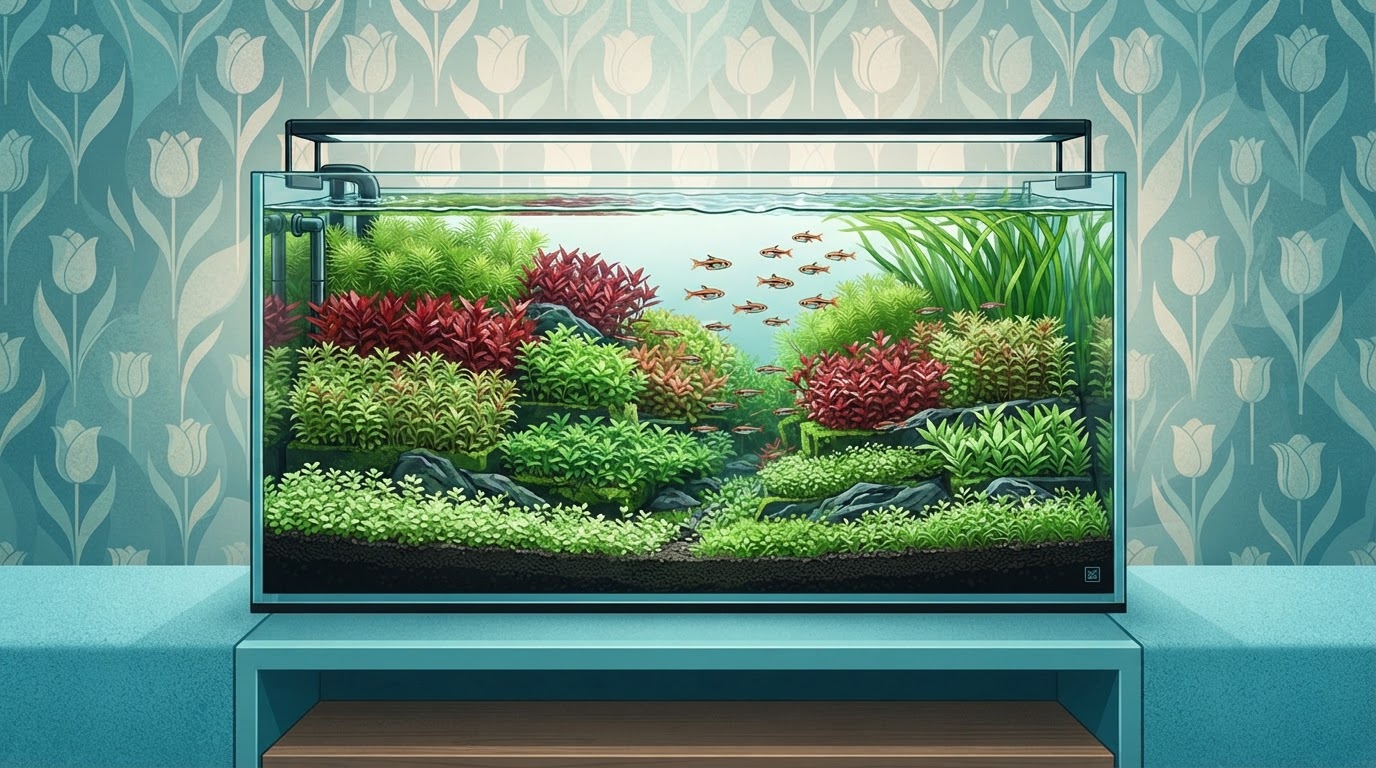
The Dutch style is the oldest of the planted aquarium styles and has a Dutch story. Part of our styles guide.
History
The style emerged in the Netherlands in the early to mid twentieth century, as aquarium equipment became commercially available. Hobbyists made plants, rather than fish, the focus. The Dutch society for aquarists, NBAT, founded in 1930, set strict rules for judging. George Farmer notes that its membership has fallen from over 24,000 at its peak to under 4,000, so the style is far less popular than it once was.
What defines it
- A lush, garden-like display with many plant types in varied colours, textures and heights, arranged in terraces.
- Plants cover most of the floor. Rocks and wood are usually left out.
- Plants are grouped by colour, size and texture and pruned into rows, often called “streets”, that lead the eye across the tank.
- The tank is usually viewed from the front, with the sides closed off.
Is it for you?
It rewards patience: neatly trimmed, feathery plants mean regular pruning, and dense planting does best with strong light and good plant nutrition. If you have little time or a tight budget, a low-tech tank is easier. If you want a natural, asymmetric look instead, see the Nature Aquarium style. Take the style quiz to compare.
Sources
- George Farmer, “The Aquascaper Series: Styles”, AMAZONAS Magazine, 2015 (NBAT, rows, front viewing, membership figures).
- “Aquascaping”, Wikipedia (terraces, origins).
- Aquifarm, “Fish Tank Styles”, aquifarm.com.
The statement that dense planting needs strong light and nutrition is our reading of the sources, not a direct claim. Full list on our sources page.
Leave a Reply