
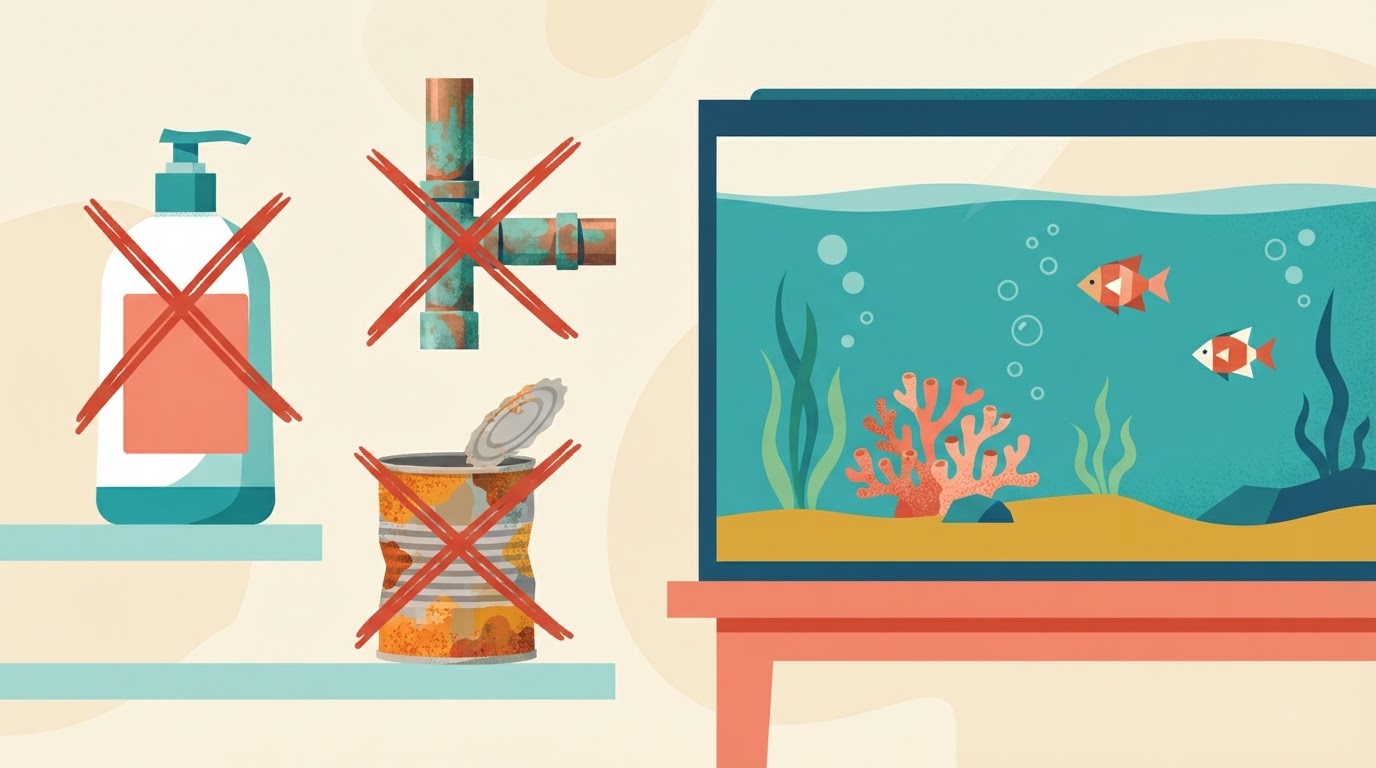
Risk label: Don’t. These shortcuts can harm fish or people. How we rate hacks
Saving money is fine. Saving it at the fish’s expense is not. These are the shortcuts we see most often, why they backfire and what to do instead.
The short answer: anything that adds soap, unknown materials or unprotected electricity to the tank is a bad trade.
1. Cleaning with soap or household cleaner
A retailer’s guide to preparing wood warns to use no soap or chemical cleansers, because any residue will poison the aquarium. The same goes for decorations and equipment. Use a brush and clean water, and rinse thoroughly.
2. Wood from the reptile shop or the woods
The same guide says wood sold for reptiles may contain chemicals that are harmful to fish, and that wood collected outdoors often has not cured properly and can rot in the tank. Buy aquarium wood and prepare it properly.
3. Skipping the water test kit
A liquid test kit is cheaper than a tank full of dead fish. Clear water says nothing about ammonia and nitrite; see the clear-water myth and our parameters guide.
4. Adding all the fish at once to “get it over with”
An uncycled tank cannot handle the waste. Cycling costs time, not money: how to cycle a new aquarium.
5. Mains electricity near water without protection
Using lights, pumps or heaters not meant for the job, or leaving plugs where water can reach them, is a risk to you as well as the fish. Stay with finished, CE-marked products and see our floodlight safety box. This is general safety practice, not a published figure.
6. Metal objects in the tank
Bare copper, brass, rusty or galvanised metal can leach into the water. As a rule, only put materials in the tank that are sold for aquarium use. This is common aquarist caution, and we have not cited a source for it.
What to do instead
- Pool filter sand for substrate.
- A sponge filter for small tanks.
- Buy second-hand tanks and stands, but replace the heater, test the seals and rinse everything in plain water.
Sources
- LiveAquaria: Adding Driftwood to Your Aquarium: soap residue, reptile wood and outdoor wood.
- Other articles on this site: clear-water myth and cycling, which cite University of Florida material.
Points 5 and 6 and the second-hand tank advice are general safety practice, not drawn from a cited source. See all our sources.
Leave a Reply