
Risk label: Safe, with a dust precaution. How we rate hacks
Branded aquarium sand is often several times the price of pool filter sand, and for many tanks the two are almost the same product. Used properly, pool sand is a simple way to save money on the largest purchase after the tank itself.
The short answer: buy plain, medium-grain filter sand, rinse it wet until the water runs clear, and keep the layer shallow.
Why it works
Pool filter sand is inert silica, so it should not change pH or water hardness, according to one hobby guide we read. Once rinsed and submerged, it is described as harmless to fish. It suits sand-lovers such as bronze corydoras, which forage across the bottom.
How to choose and use it
- Choose medium, uniform grains sold as filter sand. Very fine sand compacts, and compacted sand can develop pockets without oxygen.
- Check the label for plain silica with no additives. Pool products vary by country and brand, so if the label does not say, choose another.
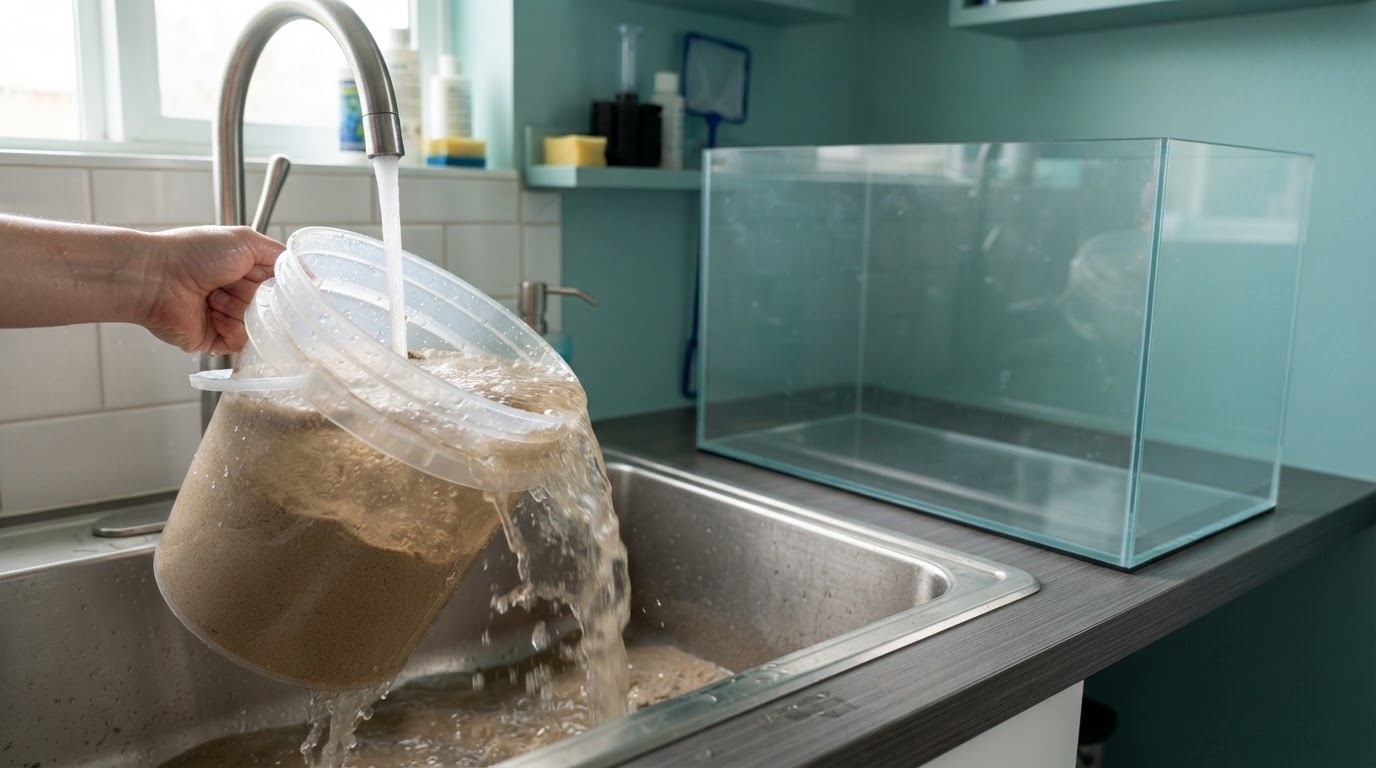
- Rinse in batches: fill a bucket about a third full, run water in at the bottom, stir by hand and let the cloudy water overflow until it runs clear. Even “pre-washed” bags are dusty.
- Keep it shallow: a layer of about 4 to 5 cm (1.5 to 2 inches) is enough.
- Maintain it: hold the gravel vacuum just above the surface, because waste sits on top, and stir the sand now and then.
Safety: the dust
Dry silica sand releases fine dust that is bad to inhale over long periods. For a hobbyist who sets up a tank once or twice a year, the risk is small, but avoid it anyway: add water to the bucket before the sand, work in a well-ventilated space or outdoors and wear an FFP2/N95 dust mask when opening the bag.
What to expect
- Silica can fuel a temporary brown algae (diatom) bloom in new tanks. See our algae guide.
- Sand holds no nutrients, so plants that feed through their roots need root tabs.
- Unrinsed sand clouds the water for days and can clog filter parts.
Frequently asked questions
Is play sand the same?
Not always. Play sand varies and can be very fine or contain additives, so we recommend filter sand with a clear label.
Will it save me money?
Usually, because filter sand is sold in bulk. The sources we read do not give price comparisons, so check local prices.
Sources
- Aquifarm: Pool Sand For Fish Tank: inert silica, grain size, rinsing method, depth and maintenance.
- Aquifarm: Silica Dust Hazards: dust risk to people, wet rinsing, dust mask, diatom blooms.
Both are hobby-site articles, not peer-reviewed or regulatory sources. Advice on checking labels, FFP2 masks and root tabs is common practice. For workplace limits on silica dust, consult official occupational-health guidance. See all our sources.
Leave a Reply