
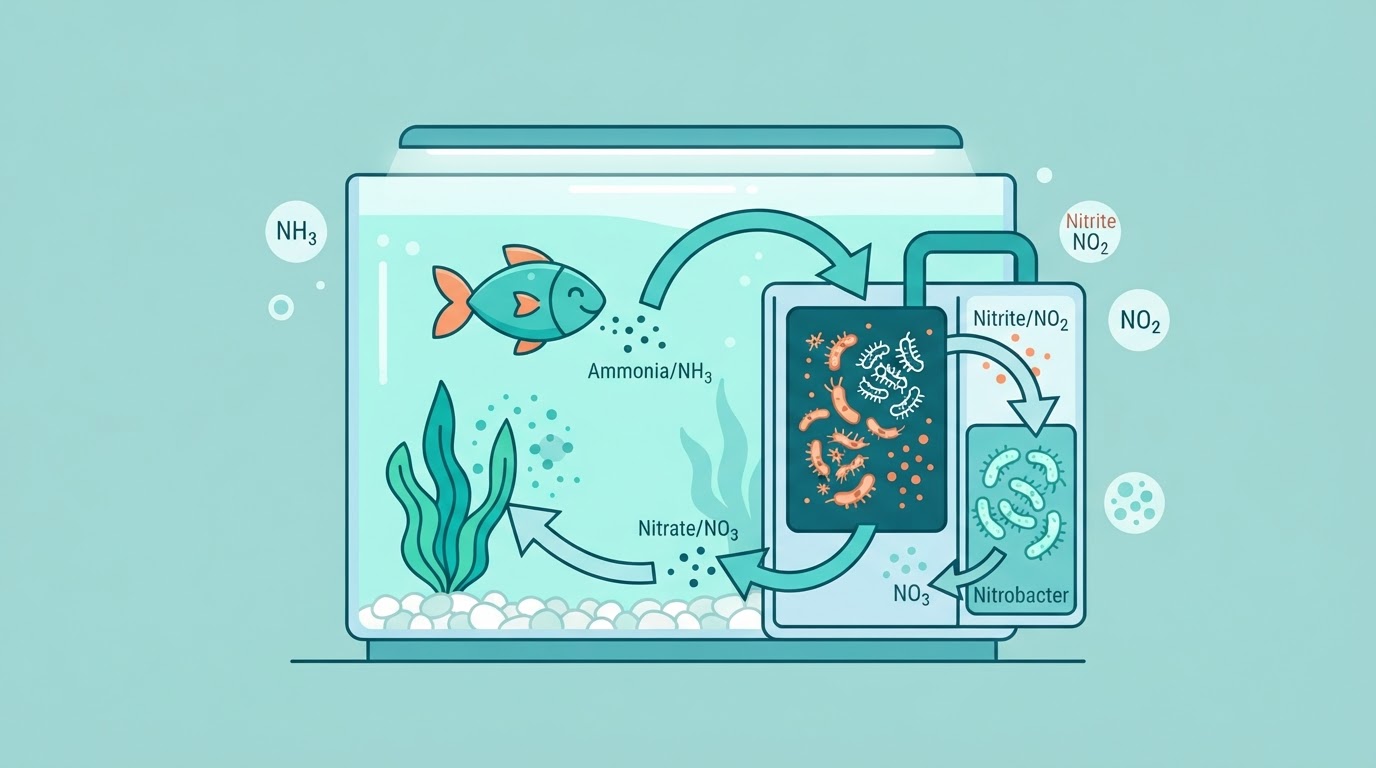
Every aquarium runs on an invisible process. Fish excrete nitrogen waste, bacteria transform it, and water changes remove what is left. Understanding the chain makes advice such as “cycle your tank” and “do not overfeed” make sense.
The short answer: fish produce ammonia; bacteria oxidise it to nitrite and then to nitrate; you remove nitrate with water changes or plants.
Step 1: ammonia
University of Florida extension material describes ammonia as the main nitrogenous waste of fish, released mainly across the gills, and notes that it is toxic. Uneaten food and decaying plant matter add more. In water, ammonia exists in two forms in equilibrium, and the proportion of the more toxic un-ionised form rises with pH and temperature, which is one reason a test kit reading should always be read with pH in mind.
Step 2: ammonia to nitrite
In the University of Florida description, nitrification proceeds in two stages. In the first, specialised bacteria oxidise ammonia to nitrite. Nitrite is still harmful to fish, so the job is half done.
Step 3: nitrite to nitrate
In the second stage a different group of bacteria converts nitrite to nitrate, which is far less toxic at ordinary aquarium levels. These bacteria live on surfaces, which is why filter media, gravel and décor matter more than the water itself.
What this means in practice
- New tanks need time to grow bacteria: cycle before adding fish.
- Nitrate is the endpoint, and it builds up until you remove it. Use the water change calculator to plan changes.
- Overfeeding and overstocking raise the ammonia load beyond what the bacteria can handle.
Frequently asked questions
Is nitrate harmless?
It is much less toxic than ammonia or nitrite, but high levels are still undesirable and it feeds algae. Regular water changes keep it down; see how often to change water.
Sources
The summary of how pH and temperature affect ammonia toxicity is standard water-chemistry background; check the linked documents for exact figures. See all our sources.